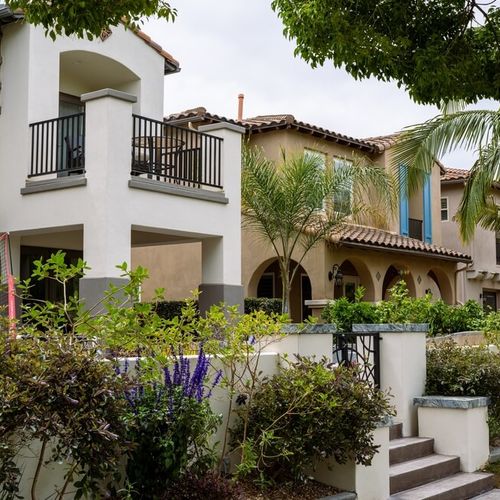

Real estate listings are full of valuable information, but they’re always crafted to paint the homes in the most positive light. As a buyer, you need to look past the marketing strategy to see the full picture.
Learning to interpret real estate listings like a pro will give you a leg up during your home search. Here are nine points to consider when dissecting a listing:

1. Price
Price is probably the first detail you look at on any listing. While the price will be a fairly straightforward number, you can dig deeper into available information to see if the property is priced fairly.
Agents have access to the local MLS, or Multiple Listing Service, which is a database of homes for sale in the area. If you want to research like an agent, you could request access to your local MLS for a fee to discover how similar homes are priced. You can also research comparable homes on public listing websites to determine if the house is priced in a fair range.

2. Taxes
The price of the home is only one factor in determining your housing payment. The listing should also have tax information, including the home’s tax assessed value and yearly tax bill. It’s common for the tax assessed value of a property to be less than its market value, so don’t panic if the asking price is higher.
Additionally, consider the last time the tax assessment changed. If the assessed value hasn’t changed in several years, it could be due for an increase soon, which will increase your property tax bill.

3. Size and Layout
To interpret a listing like an agent, you should look beyond the total square footage and consider the entire layout of the home. Two properties with identical square footage could be completely different in layout, making one a dream home for your family and the other a terrible fit.
Understanding the home’s layout will also help you understand how many bedrooms and bathrooms you’re working with. Specific criteria must be met for a room to be officially counted as a bedroom on a listing. For example, a room in a finished basement might not count toward a home’s square footage or total number of bedrooms, but you may feel that it will work perfectly fine as a bedroom. Criteria for half and three-quarter baths can vary as well.
4. Year Built
The year a house was built can provide a lot of insight into its overall quality as well as repairs or upgrades that may be needed in the near future. For instance, if the home was built 20 years ago, it will probably be due for a new roof soon.
In general, you should expect older houses to need more work. However, older homes that were built before current codes may be grandfathered in, giving you some leeway. Keep in mind, too, that old homes may have safety issues, such as asbestos and lead, that could create extra problems when trying to perform repairs or renovations.

5. Number and Type of Photos
Not only do listing photos give you a visual guide to the property, but they can also reveal a lot of subtle details about the home if you look closely. First, consider the number of photos included in the listing. An average listing has about 25 photos, so if you see significantly less, the seller may be hiding something.
What is and isn’t featured in the photos can also be revealing. If you see 20 photos of the home’s exterior and only one blurry picture from inside, you can assume the house is in a state of mess or disrepair. If certain rooms are missing from the photos, you should be suspicious.
6. Photo Angles
Angles can reveal what the photographer does and doesn’t want to showcase in their pictures. Be on the lookout for wide-angle, “fishbowl” photos that try to make a tiny room look enormous. If the windowsills or outlets look oddly placed, the picture was probably taken at this wide angle.
When looking at exterior shots, note any photos that seem cut off at strange points. If the house is next to a construction site or other eyesore, the photo may be strategically cut off to hide the view.

7. Days on Market
Check when the listing was posted to see how many days the home has been on the market. If the property has been sitting on the market for much longer than average, something might be wrong. It’s possible that it’s an excellent home that just hasn’t found the right buyer yet, but you should dig into the details and stay alert for other red flags.
8. Listing History
In addition to looking at when this listing went live, you should also look into the historical listing information. You might see that the house sold just a year ago and has now been re-listed at a much higher price. In this case, the property is almost certainly being flipped. Be on the lookout for signs of sloppy or cost-cutting workmanship.
Another common red flag is a home that has gone under contract and then been put back on the market multiple times. A buyer could back out of a home sale for a reason that has nothing to do with the home’s condition, so if the property gets re-listed once, you shouldn’t worry. However, a pattern of failed contracts suggests that something is repeatedly going wrong with the inspection or appraisal.
9. Language in Description
You can learn a lot about a house by reading between the lines of the listing description. A good write-up is eye-catching, easy to read, and includes specific and relevant details about the home’s features.
Be cautious of listings that use flowery language without offering any specifics about the property. Certain phrases can carry a lot of weight in a listing description, too. Here are some of the most common phrases that often have hidden meanings:
“Fixer-upper:” Referring to a home as a “fixer-upper” or “in need of some TLC” is the most positive way to describe a property in disrepair. Typically, when a house is described with these phrases, it needs more than a little elbow grease. You’ll probably be looking at major renovations just to make the home livable.
“Investment opportunity:” This phrase can have a couple meanings. Sometimes, like calling a house a “fixer-upper,” agents refer to homes in bad condition as “investments” to appeal to flippers. Alternatively, this could mean that the house is currently occupied by a tenant, so the listing is being marketed to property managers.
“Motivated seller:” This phrase refers to a seller who needs to close on the home quickly and is open to negotiating. A motivated seller can be great to work with in some cases and can be a red flag in others. If, for instance, the seller inherited the property from a relative who passed away, they may have very little information about the condition of the home or when any systems or appliances were replaced. If they’re selling quickly to avoid foreclosure, they may not have had the means to properly care for the house.

Interpreting Listings Like a Pro
To read a real estate listing like an expert, you need to look at all the details and read between the lines. Note what information is readily included in the listing versus what is carefully concealed. If you’re in the market to buy a house, you should always work with a trusted agent who can offer their insight into the listings.